





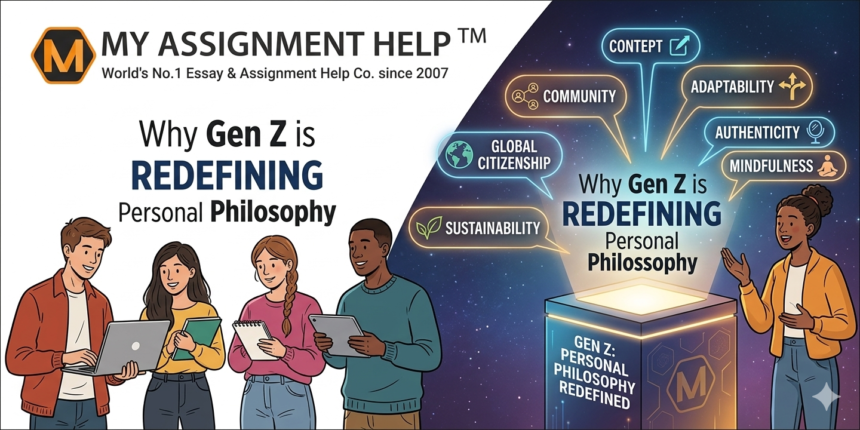
In the quiet corners of Reddit threads and the fast-paced scrolls of TikTok, a profound shift is occurring. It’s not just about fashion cycles or digital slang; it is a fundamental re-engineering of how humans interact with morality. Generation Z (those born between 1997 and 2012) is often characterized by their digital fluency, but their true legacy may well be the “Ethics of Everything.”
For previous generations, philosophy was often an academic pursuit—something studied in leather-bound books or discussed in hushed university halls. For Gen Z, philosophy is a lived, breathing, and daily practice. From the coffee they drink to the code they write, every action is scrutinized through a lens of social responsibility, environmental impact, and radical transparency.
The Death of the “Passive Consumer”
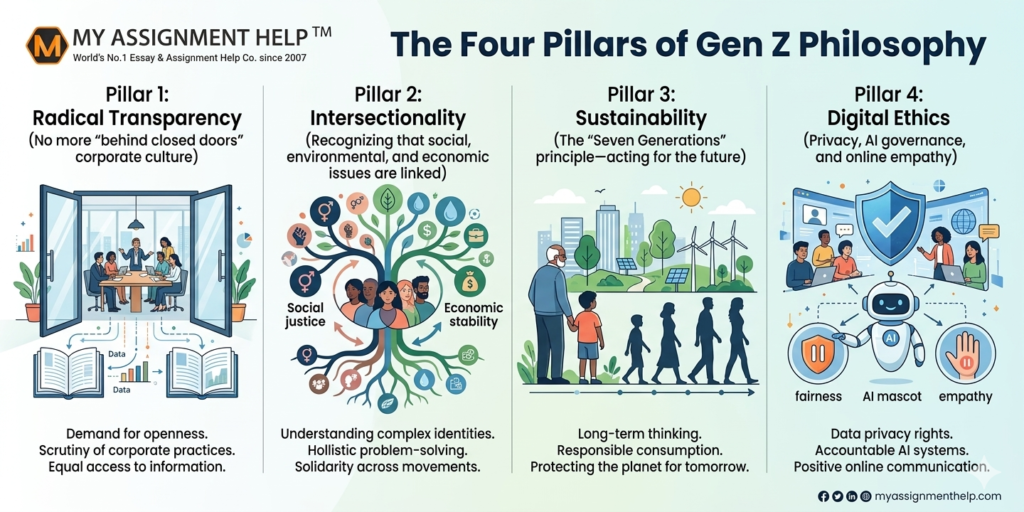
The hallmark of Gen Z’s philosophical shift is the total rejection of moral compartmentalization. Older cohorts might have separated their career goals from their environmental concerns, or their shopping habits from their political stances. Gen Z sees the world as a hyper-connected web. According to a report by First Insight, 73% of Gen Z consumers are willing to pay more for sustainable products—more than any other generation.
This isn’t just “conscious consumerism”; it’s a modern application of Virtue Ethics. They aren’t just buying a product; they are endorsing a supply chain. This demand for systemic integrity has pushed philosophy out of the classroom and into the boardroom. However, the rigor required to navigate these complex moral landscapes can be daunting. Students grappling with the nuances of Kantian ethics or Utilitarianism in a modern context often seek expert guidance to bridge the gap between theory and practice. If you find yourself overwhelmed by the academic demands of these evolving ideologies, exploring resources for philosophy assignment help can provide the clarity needed to master these complex dialogues.
The Intersection of Digital Identity and Existentialism
Gen Z is the first generation to grow up with a “digital twin.” Their lives are archived in real-time, leading to a unique form of modern existentialism. When Jean-Paul Sartre spoke of “existence preceding essence,” he couldn’t have imagined a world of Instagram grids and LinkedIn profiles.
For Gen Z, the “self” is a project under constant construction. This has led to a rise in “Authenticity Ethics.” In a world of deepfakes and AI-generated content, the “truth” has become the highest currency. This drive for authenticity is why Gen Z is more likely to support brands and influencers who show “the messy middle” rather than curated perfection.
Data-Driven Morality: The Stats Behind the Shift
The shift toward a philosophy-driven life is backed by significant data:
- Work-Life Purpose: 42% of Gen Zers prioritize findng a job that aligns with their values over a high salary (Deloitte 2023 Gen Z and Millennial Survey).
- Mental Health as a Moral Right: Unlike predecessors who viewed mental health as a private struggle, 87% of Gen Z views mental health support as a fundamental human right and a corporate responsibility (American Psychological Association).
- Global Citizenship: Gen Z is the most racially and ethnically diverse generation in history, leading to a “Cosmopolitan” philosophy that prioritizes global equity over nationalistic interests.
For many students in the UK and beyond, balancing these high-stakes personal values with the grueling pressure of academic excellence can lead to burnout. Seeking a reliable online assignment helper has become a strategic move for many who wish to maintain their mental well-being while ensuring their academic contributions meet the highest ethical and professional standards.
The Role of “Cancel Culture” as a Moral Corrective
While often criticized, “Cancel Culture” is, at its core, a decentralized form of social justice. To Gen Z, it is the democratization of accountability. In the absence of swift legal or corporate reform, social media becomes the courtroom. This is a contemporary iteration of the “Social Contract Theory,” where the community collectively decides the bounds of acceptable behavior.
Key Takeaways
- Philosophy is Action: For Gen Z, ethics isn’t what you say; it’s what you do, buy, and support.
- Systems Thinking: They view individual problems (like plastic waste) as symptoms of larger systemic failures.
- Authenticity is Paramount: The rejection of “corporate speak” in favor of raw, honest communication.
- Global Perspective: A shift from “me” to “we,” focusing on global impact rather than local convenience.
Conclusion: A World Reimagined
The “Ethics of Everything” is more than a trend; it’s a necessary evolution for a world facing unprecedented challenges. As Gen Z moves into positions of power, we can expect to see a total transformation of the workplace, the marketplace, and the very fabric of our social interactions. They are teaching us that philosophy isn’t just for the dead—it’s the most important tool we have for staying alive.
Frequently Asked Questions (FAQ)
Q: How does Gen Z philosophy differ from Millennial philosophy?
A: While Millennials focused heavily on “The Experience Economy” and individual wellness, Gen Z leans more toward “Systemic Reform” and collective accountability. Millennials started the fire; Gen Z is redesigning the fireplace.
Q: Is Gen Z more religious than previous generations?
A: Statistically, no. They are more likely to identify as “religiously unaffiliated,” but they are deeply spiritual and “value-oriented,” replacing traditional religious structures with secular ethical frameworks.
Q: Does Gen Z really care about ethics, or is it just for social media?
A: Data suggests the commitment is real. Their spending habits, career choices, and voting patterns consistently align with the ethical stances they promote online.
Author Bio: Sarah Jenkins
Sarah Jenkins is a Senior Academic Consultant and Lead Content Strategist at MyAssignmentHelp. With a Master’s degree in Applied Ethics from King’s College London, Sarah has spent over a decade helping students navigate the complex intersections of classical philosophy and modern societal shifts. When she isn’t decoding the nuances of Nietzsche or Kant, she is advocating for mental health awareness in higher education.
References & Sources:
- Deloitte (2023). “2023 Gen Z and Millennial Survey: Living with uncertainty, yet pushing for change.”
- First Insight (2022). “The State of Consumer Spending: Gen Z Shoppers Demand Sustainable Retail.”
- American Psychological Association (2023). “Stress in America: A Generation Prepared for Change.”
- Pew Research Center (2020). “On the Cusp of Adulthood and Next to Number, Gen Z is Looked at for Change.”