




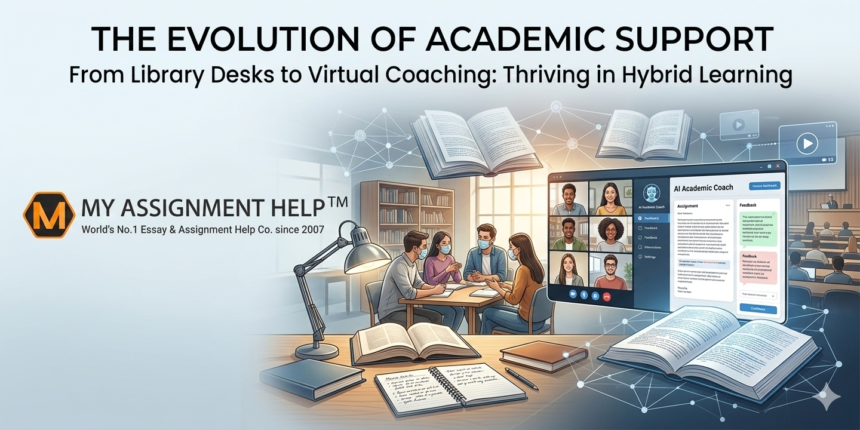
The landscape of Australian higher education has undergone a tectonic shift. As we navigate through 2026, the traditional image of students packed into sandstone lecture theatres has been replaced by a dynamic, “borderless” classroom. Hybrid learning—the seamless integration of in-person and digital instruction—is no longer a temporary fix but the gold standard of the modern academic experience.
With nearly 50% of tertiary learners in Australia now studying part-time and multi-modal enrolments surging by 9.9% annually, the demand for flexibility has never been higher. However, this shift brings a unique set of challenges: digital fatigue, the “loneliness epidemic” affecting over 90% of remote students, and an increasingly complex curriculum. To thrive, students are moving beyond basic tutoring toward a more integrated, 24/7 ecosystem of academic support.
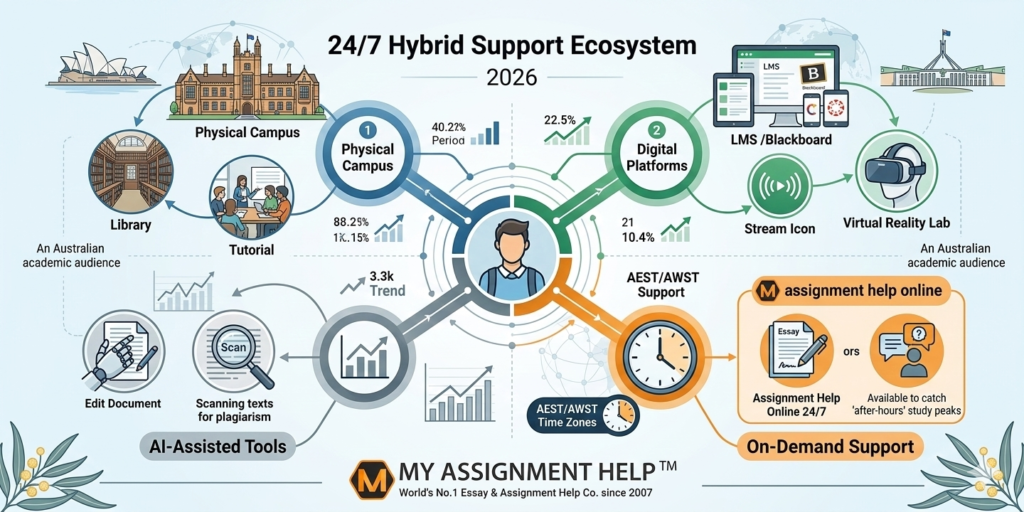
The Digital Pivot: Redefining “The Classroom”
In the current Australian academic climate, the “classroom” is anywhere with a stable Wi-Fi connection. From the regional hubs of Western Australia to the bustling campuses of the University of Melbourne, students are balancing work, life, and study like never before. This flexibility is a double-edged sword; while it democratizes education, it also requires a higher level of self-regulation and technical proficiency.
Many students find that standard university resources are often limited to traditional business hours, leaving a gap during late-night study sessions. This is where professional assignment help online becomes a strategic asset, providing the bridging support necessary to translate complex hybrid lectures into high-distinction submissions. By offering tailored guidance that aligns with TEQSA’s 2026 quality standards, these services ensure that students in remote or flexible arrangements aren’t left behind by the digital divide.



Data-Driven Support and Environmental Context
One of the most significant evolutions in academic support is the move toward data-driven insights. Australian universities are now leveraging learning analytics to identify students at risk of falling behind before they even submit an assignment. This proactive approach mirrors how we analyze global trends, such as the Greenhouse Effect, where data modeling is essential to understanding long-term impacts. Just as scientists use specific metrics to track environmental shifts, academic strategists use engagement data to tailor support systems to individual needs.
The Rise of AI and Human-Centric Mentorship
By 2026, the role of Artificial Intelligence in Australian schools and universities has matured. While general-purpose AI tools are used for brainstorming, there is a documented “performance gap” where students using unguided AI often struggle in controlled exam environments. The evolution of support now emphasizes “Pedagogical Intent”—using technology not to replace thinking, but to enhance it.
Academic support services have adapted by pairing AI efficiency with human expertise. This hybrid model provides:
- Real-time feedback loops: Immediate insights on draft structures.
- Integrity-first guidance: Ensuring all work meets the strict 2026 Australian academic integrity frameworks.
- Specialized subject depth: Access to PhD-level experts in niche fields that local campus staff may not cover.
Key Takeaways
- Flexibility is King: Hybrid learning is the preferred model for 77% of Australian students due to work-study balance.
- Holistic Support is Vital: Academic success in 2026 requires a mix of university resources, peer engagement, and external professional support.
- Integrity Over Automation: Successful students use AI as a tool for “learning gains,” not just “task performance.”
- Data Matters: Analytics are now used to personalize the student journey and improve retention rates.
Comparison of Traditional vs. 2026 Hybrid Support Models
| Feature | Traditional Support (Pre-2020) | Hybrid Support (2026) |
| Availability | Mon-Fri, 9am – 5pm | 24/7 Digital Access |
| Format | Face-to-Face Tutoring | Multi-modal (Video, Chat, AI-Assisted) |
| Focus | Subject-Specific Knowledge | Skills-Aligned & Career Ready |
| Technology | Basic LMS (Moodle/Canvas) | AI-Integrated Personalised Pathways |
| Reach | Campus-Bound | Global & Regional Australia |
FAQ: Navigating Hybrid Learning in Australia
Q: How do I ensure academic integrity when using online support?
A: Always use reputable services that provide original, data-driven research and focus on explaining concepts rather than just providing answers. Ensure the service follows the Tertiary Education Quality and Standards Agency (TEQSA) guidelines.
Q: Are there specific tools for regional Australian students
? A: Yes, many universities now offer “Mobile-First” learning platforms and 24/7 academic support services specifically designed to accommodate students in areas with varying internet speeds or different time zones.
Author Bio
Dr. Aris Thorne is a Senior Academic Consultant at MyAssignmentHelp, specializing in the intersection of EdTech and student psychology within the Australian higher education sector. With over a decade of experience in curriculum design and SEO strategy for academic platforms, Dr. Thorne focuses on helping students navigate the complexities of hybrid learning through data-driven support and evidence-based study techniques.
References:
- Tertiary Education Quality and Standards Agency (TEQSA), “Guidance Note: Learning Resources and Educational Support,” June 2025.
- OECD Digital Education Outlook 2026, “Generative AI and the Future of Learning.”
- Department of Education, Australia, “Data Strategy 2026–2028: Building a Data-Capable Workforce.”
- AcademicJobs.com, “Australian Unis Hybrid Learning Shift: Trends & Impacts,” March 2026.